
Assimilation, Accommodation, and Vocabulary

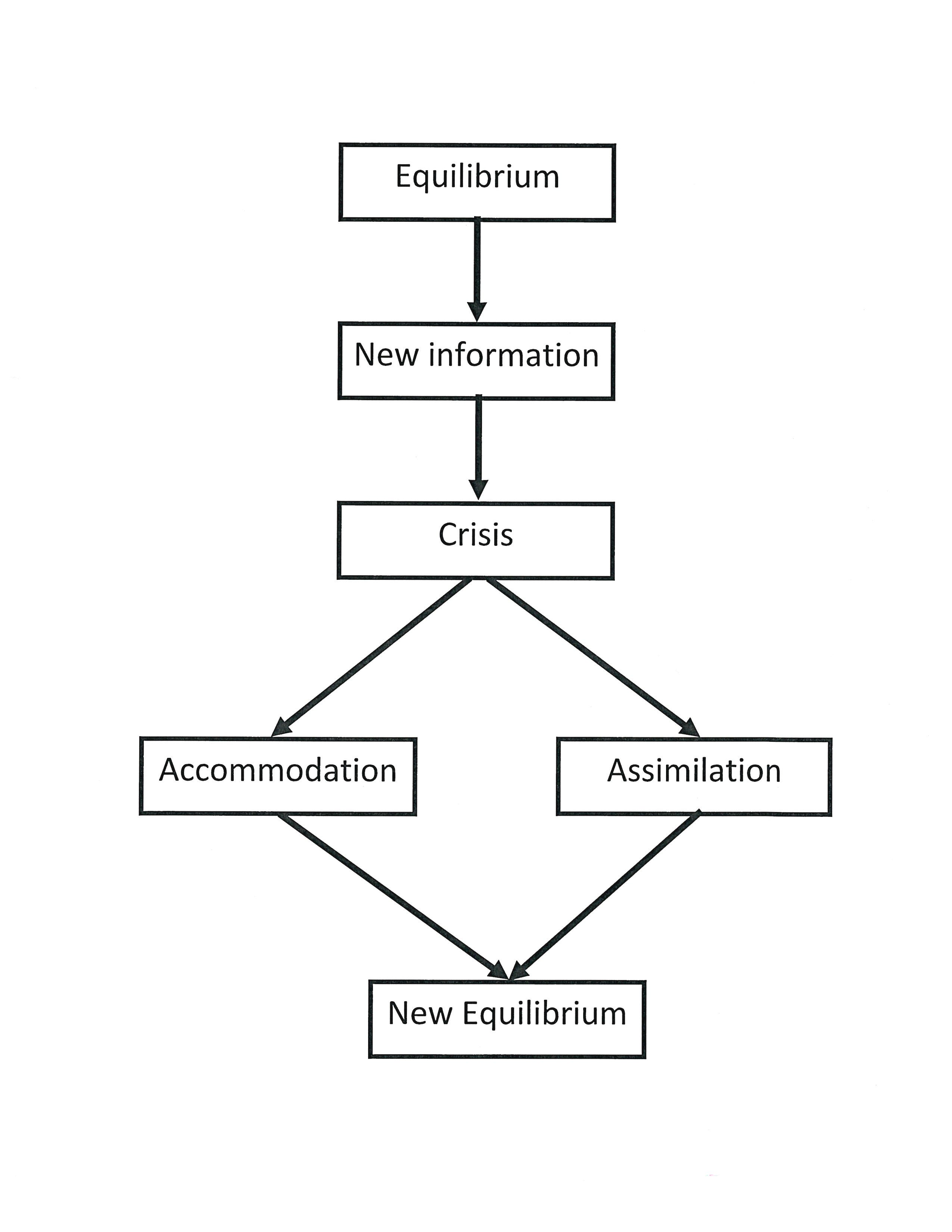
Jean Piaget, a Swiss psychologist, developed a learning meta-theory more than 100 years ago that seems all about the wineskins Jesus refers to in the Synoptic Gospels. According to Piaget, humans, especially as we age and gather experience and education, develop a worldview, no matter how simple or flawed, that is internally consistent enough to live into without exhausting energy reserves from newfound stress on a daily basis. Piaget called this state of relative comfort in our worldview/schema “equilibrium.” We could live at equilibrium forever, with some base efficiency, unless we encounter new information, information that does not match our worldview. Information of this sort presents our brains/worldview/schema a crisis, even if only subconsciously. Will we either change our equilibrium to include the new information, “accommodate,” or will we change or dismiss the information to fit our equilibrium, “assimilate”? Either way, we return to an equilibrium/schema/worldview, either a new one or the same one, and repeat this cycle as experience presents us with opportunities.
Jesus says, regarding the Gospel itself, that one cannot pour new wine into old wineskins. New wine stretches as it ages and ferments and breaths. Previously stretched skins have lost their elasticity. Stretching them a second time will tear the skins and forfeit the wine. New skins are needed for new wine. And maybe the Gospel itself, alongside the rite of reconciliation, requires us to change our worldview around it, to be transformed instead of changing the information to fit who we already are, transfiguration. I think one of the reason the Gospel, which literally means “good news” and hence the symbolism of wine which represents joy in Jewish tradition to this day, is often so joyless for folks (myself included more often than I would like to admit), is that we try to adapt God to how we already think, instead of adapting how we think and perceive and hear and what we enjoy to match God.
What follows and has preceded might seem circuitous and even bombastic at times, but I present all that I can towards an accommodation of the rite of reconciliation and the Gospel of Jesus Christ itself. There are myriad re-definitions that follow in order to build this concept of what reconciliation and Gospel are so that we can accommodate our worldviews to it/them. I perceive these necessary because not only are definition of theological words not standardized, but especially because many of them have been watered down, many in just the last 115 years, with an intention to privatize religious piety from social and embodied living with intent. Our vocabularies have been co-opted, as it were, more than we know. Investigating what a word or phrase might mean feels paramount to the accommodation work and to getting us all, literally, on the same page for discussion. One further warning: I somehow favor the inverted thesis, no matter how much I have been warned to be direct or write differently. If a section doesn’t seem to fit, perseverance is encouraged!